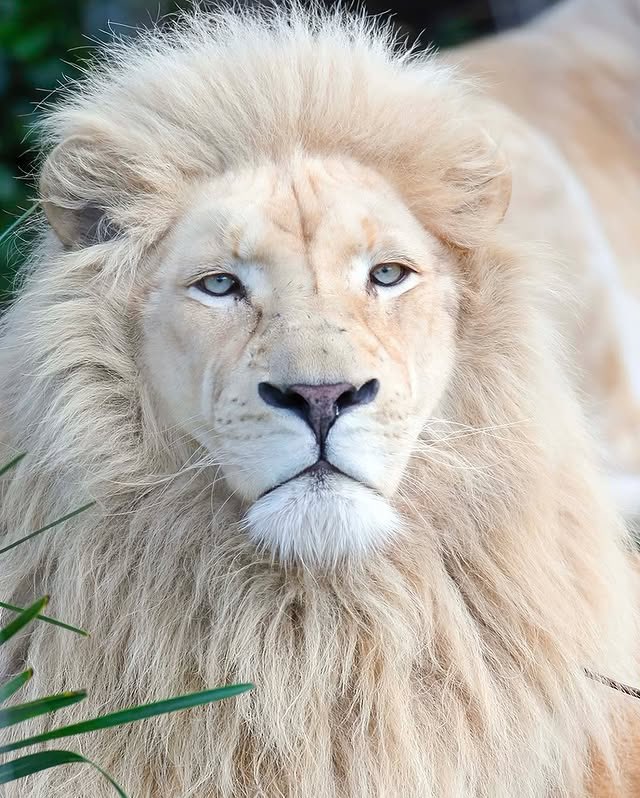
 White lions are one of those animals people think they know because they have seen a few photos online. A pale mane. Light eyes. That dreamy, almost mythical look. So the brain goes, ok, albino lion. But that is usually not what it is.
And once you get past the “wow” factor, the story gets more interesting. Genetics. Geography. Conservation politics. Captive breeding. The uncomfortable parts too.
So yeah, here’s the full picture. What a white lion actually is, why it exists, why it is rare, and where you can see one in a way that feels at least somewhat responsible.
What is a white lion, really?
A white lion is not a separate species. It is the same species as any other African lion: Panthera leo. The difference is a genetic trait called leucism, which reduces pigmentation in the fur.
This matters because people constantly mix up these terms:
- Albinism: complete lack of melanin pigment. Albino animals often have pinkish skin and red or pink eyes, and they can have more severe vision issues.
- Leucism: reduced pigmentation in the fur (and sometimes skin), but not a total absence of melanin. Eye color is usually normal, often golden or blue gray, not red.
Most white lions you see are leucistic, not albino.
Their coat can range from near white to blonde to very pale cream. It is not always pure white like the “poster” images make it look. Lighting and editing do a lot of heavy lifting in viral photos.
Where do white lions come from in the wild?
When people talk about “true” white lions, they are usually referring to the natural population linked to the Greater Timbavati region and areas around Kruger National Park in South Africa.
Historically, white lions were recorded in this region because the recessive gene was present in that local lion population. It is not that the environment makes lions white. It is genetics. Two parents carrying the recessive allele can produce a white cub.
So you can have two normal colored lions and still end up with a white cub, as long as both are carriers.
And because it is recessive, it can sit “hidden” in a population for a long time.
Why are white lions so rare?
A few reasons stack on top of each other.
1) The gene is recessive
This alone makes it uncommon. Two carriers need to pair, and then only some of the cubs will be white.
2) Survival is harder in the wild
A pale lion is more visible in many habitats. That can affect:
- hunting success, especially when learning as a cub or sub adult
- vulnerability to humans
- potentially, social dynamics (though lions are complicated and it varies)
Now, lions hunt in groups, and adults rely more on teamwork and positioning than pure camouflage. So it is not a simple “white lions cannot survive” thing. Some absolutely have.
But the odds are not as friendly.
3) Human interference, historically
White lions attracted attention from trophy hunters and collectors. They were also removed from the wild for captivity. That disrupts any already rare gene line.
4) Captive breeding changed the public image
Many white lions around the world are in captivity, bred for their appearance. That makes the animal feel “common” online while it remains rare, and controversial, in natural settings.
This is the part where some people get uncomfortable, because white lions are often tied up with the wildlife entertainment industry. More on that in a minute.
Are white lions endangered?
This is where wording gets slippery.
African lions overall are listed as Vulnerable on the IUCN Red List (and some regional populations are in worse shape). White lions are not a separate taxonomic category, so they do not get a separate global IUCN listing as “white lions.”
But “rare genetic trait in a specific region” can still be conservation relevant. If you remove the trait from the wild population through hunting, capture, or habitat disruption, it can effectively disappear from that ecosystem.
So, are white lions endangered as a distinct group? Not officially in the IUCN sense. But the natural occurrence of white lions in the wild has been under pressure, and their story is tangled up in broader lion conservation challenges.
The cultural and symbolic side (and why people care so much)
In parts of South Africa, especially within communities connected to the Timbavati region, white lions have been viewed as spiritually significant. People sometimes call them “sacred” animals, messengers, symbols, all of that.
Even if you are not spiritual at all, it is still worth knowing. White lions are not just Instagram wildlife. They are part of a local landscape and history. That’s one reason the ethics around them can get heated fast.
The big ethical issue: white lions in captivity
If you are trying to decide where to see a white lion, this is the part that actually matters.
A huge number of white lions live in:
- roadside zoos
- breeding facilities
- cub petting attractions
- “walk with lions” operations
- places that let tourists bottle feed cubs
- facilities tied to canned hunting supply chains (in the worst cases)
Not every facility is the same, and I am not going to pretend it is easy for a tourist to tell what is legit. Some places are genuinely trying. Others are basically marketing machines.
But here are a few red flags that should make you pause:
Red flags to watch for
- Cub petting or constant cub handling for photos
- Cubs should not be passed around like props. If you see a steady stream of tourists holding cubs, something is off.
- Breeding advertised as a tourist attraction
- Reputable sanctuaries usually do not breed predators for display.
- “Walk with lions” experiences
- These are often defended as conservation education. In practice, they are usually entertainment.
- Vague claims like “we are conserving white lions” with no detail
- Ask where the animals came from, whether they breed, and what happens to the lions when they are no longer cute.
- Unclear policy on selling animals
- A sanctuary should be transparent.
A more responsible choice tends to be either:
- seeing lions, including possibly white lions, in a wildlife reserve where they live in large natural spaces
- or
- visiting an actual sanctuary that does not breed, does not allow direct contact, and prioritizes animal welfare.
But even reserves have nuance. Some are fully wild ecosystems. Others are managed, fenced, and may buy or introduce animals. That does not automatically make them “bad,” but it is different from a national park.
What do white lions eat and how do they live?
Same as other lions.
- Diet: mostly large ungulates (in the wild), plus opportunistic feeding
- Social structure: prides, typically females form the stable core
- Lifespan: in the wild often around 10 to 14 years, in captivity sometimes longer
White lions do not have some special diet or magical temperament. If a facility tells you they are “gentler” or “more friendly,” that is marketing.
Can white lions live in the wild today?
Yes, they can. And there have been white lions recorded in and around protected areas in South Africa, especially when conservation programs and protections make it possible for carriers of the gene to persist.
But it is complicated. Lions need space. They need prey. They need protection from conflict with humans. And they need a functioning ecosystem more than they need us celebrating their color.
Which is the point, really.
Where can you see a white lion?
Let’s split this into two categories, because it helps you decide what kind of trip you want.
- Wild or semi wild settings (reserves, national parks, large protected areas)
- Sanctuaries and conservation centers (non-contact, welfare focused places, ideally)
And I’ll be honest upfront. Seeing a white lion in a truly wild context is not guaranteed. Even in regions where the gene exists, you are dealing with a rare trait and a moving animal that does not care about your itinerary.
1) Greater Kruger area, South Africa (including Timbavati region)
If you want the “origin story” landscape, you are essentially looking at the Greater Kruger ecosystem and adjacent private reserves, including the broader Timbavati area.
- Why it matters: This is where white lions have historically been recorded in the wild.
- What to expect: A safari experience where you might see many lions and possibly, if you are lucky, a white lion or a pale offspring.
Important note: access varies. Some areas are private reserves with guided safaris. Kruger National Park itself is public, huge, and incredible, but the chances of seeing a white lion specifically are low because of rarity and the fact you are mostly self-driving on roads.
If your priority is “I must see a white lion,” you will probably aim for a reputable private reserve connected to the Greater Kruger ecosystem, and even then it is not a promise.
2) Lion & Safari Park, near Johannesburg, South Africa
This is one of the more well-known places that has had white lions and offers an accessible option near a major city.
- Why people go: easy day trip from Johannesburg, structured wildlife viewing
- The reality: it is not a national park wilderness experience. It is a managed park.
If you go, treat it like a wildlife park experience, not a wild safari. Ask questions. Look at how the animals are housed and handled. Skip anything that feels like an animal selfie factory.
3) Sanbona Wildlife Reserve, Western Cape, South Africa
Sanbona is often mentioned because it has had white lions within its reserve.
- Why it’s popular: It is closer to Cape Town than Kruger (still a drive), and it markets itself as a conservation focused reserve.
- What to know: It is a large reserve but it is not the same ecosystem as Greater Kruger. White lions there are not “native” in the historical Timbavati sense. Some travelers are fine with that. Some want the original region. Just be clear on what you personally care about.
4) Welgevonden and other private reserves (South Africa)
Some private reserves have had white lions at different times, though the situation changes as prides shift, lions are relocated for genetic management, or conservation strategies evolve.
If you are booking a safari specifically to see a white lion, do not rely on a random blog list. Call and ask:
- Have white lions been seen recently, within the last few months?
- Are they free roaming within a large reserve or kept in a smaller enclosure area?
- What is your policy on breeding and animal handling?
If the answers get weirdly vague, that is information too.
5) Global zoos (outside Africa)
You can see white lions in many accredited zoos around the world. This is the easiest way, logistically, for most people.
But it comes with tradeoffs:
- You are seeing the animal, yes.
- You are not seeing it in a functional ecosystem.
- You might be supporting legitimate education and welfare, depending on the zoo.
If you choose a zoo route, look for:
- reputable accreditation (varies by country)
- transparent welfare standards
- no direct contact programs
Not perfect, but often far better than “cub selfie” attractions.
How to choose a responsible place to visit (quick checklist)
If you only take one practical thing from this article, let it be this list. Because marketing is loud, and reality is quiet.
Green flags
- No cub petting, no bottle feeding, no “hold a lion” photos
- No breeding for commercial purposes (or at least clear, conservation justified breeding with transparency)
- Clear veterinary care and animal welfare standards
- Educational messaging that does not romanticize interaction
- Large, naturalistic habitat with enrichment and minimal stress
- Transparency about where animals came from and where they go
Questions worth asking before you book
- Can visitors touch any lions at any age?
- Do you breed lions? If yes, why, and what happens to offspring?
- Do you buy, sell, trade, or loan lions?
- Are lions used for walks, performances, or photos?
- What is the space per lion, and can they choose to avoid people?
If a place is proud of its ethics, these questions will not annoy them. They will answer fast, and clearly.
Best time to see lions (and realistically, white lions)
This depends on where you go, but for many safari regions in southern Africa:
- Dry season often makes wildlife easier to spot because vegetation is thinner and animals congregate around water sources.
- Early morning and late afternoon are typically best for lion activity.
Still, a white lion is a needle in a haystack in wild conditions. You increase odds by spending more days, not by trying to “hack” the timing.
A two day safari is fun. A five to seven day safari is when sightings start to feel less like luck and more like inevitability.
White lion vs white tiger: not the same story
People often confuse these two because both are “white big cats,” but their conservation narratives are different.
- White tigers, which are mostly associated with captive breeding and inbreeding in many contexts, have a troubling conservation story. The truth about white tigers reveals the complexities surrounding their existence.
- White lions, on the other hand, have a known natural origin in a specific region and are tied to wild populations, even though captivity has also shaped their current distribution.
So, if someone says “white lions are just like white tigers,” it is not a clean comparison. There is overlap, but it is not identical.
A gentle warning about photo ops
If your itinerary includes phrases like:
- “cuddle”
- “play”
- “selfie”
- “walk with”
- “up close encounter”
…stop and reassess.
I know it sounds harsh. But the wildlife tourism industry is very good at making exploitation feel like a once-in-a-lifetime opportunity. And white lions, because of the color, are used heavily in that kind of marketing.
If you want something that actually feels incredible and not weird, do a proper safari drive. Watch a pride interact. See the hierarchy. Hear them at night. That is the real experience. Not hugging a cub that will be inconvenient in three months.
So, what is the best way to see a white lion?
If you want the most meaningful version of the experience, aim for South Africa, ideally linked to the Greater Kruger and Timbavati region, and book with a reputable operator who prioritizes conservation and welfare.
If travel is not realistic, an accredited zoo with strong welfare standards is a better backup than any hands-on attraction.
And if a place is selling you the fantasy of closeness. Like you are the chosen one and the lion is your friend. That is usually the sign to walk away.
Wrap up
White lions are not albinos. They are not a separate species. They are lions with a rare leucistic trait, historically tied to a specific region in South Africa, and now wrapped up in a messy mix of conservation hope and commercial exploitation.
If you want to visit one, you can. Just choose carefully. Prioritize places that do not let you touch them, do not treat cubs like toys, and do not hide their policies behind glossy photos.
Because the best white lion experience is still the simplest one.
You see it being a lion. No performance. No props. Just that quiet, heavy presence in the grass, and the feeling that you are lucky to be there at all.
FAQs (Frequently Asked Questions)
What exactly is a white lion?
A white lion is not a separate species but the same African lion species (Panthera leo) with a genetic trait called leucism that reduces pigmentation in their fur, resulting in a pale coat and light eyes. Unlike albino animals, white lions typically have normal eye color and are not completely devoid of melanin.
Where do white lions naturally occur in the wild?
White lions naturally occur in the Greater Timbavati region and areas around Kruger National Park in South Africa. Their white coat results from a recessive gene present in this local lion population, meaning two carrier parents can produce white cubs even if both parents have normal coloration.
Why are white lions considered rare in the wild?
White lions are rare because the leucism gene is recessive, requiring both parents to carry it for white offspring to be born. Additionally, their pale coloration makes survival harder due to increased visibility affecting hunting success and vulnerability. Historical human interference such as trophy hunting and capture further reduced their numbers.
Are white lions classified as endangered species?
White lions are not officially classified as endangered since they are not a separate taxonomic category but part of the African lion species, which is listed as Vulnerable by the IUCN Red List. However, the natural occurrence of white lions is under threat due to habitat disruption, hunting, and removal from the wild.
What cultural significance do white lions hold?
In South African communities near Timbavati, white lions hold spiritual significance and are considered sacred animals or messengers. They symbolize more than just wildlife; they are integral to local history and culture, which adds complexity to ethical considerations surrounding their conservation.
What ethical issues surround white lions in captivity?
Many captive white lions live in roadside zoos, breeding facilities, cub petting attractions, and tourism operations that may exploit them for entertainment or canned hunting supply chains. Not all facilities are equal, making it challenging for tourists to identify responsible places to see white lions while supporting ethical conservation practices.